Integration of the Security Program with IT Operations - CISM Domain 3
Estimated reading time: 5 minutes
Fawad Mehmood Expert review Last Updated On:
CISM Domain 3 - Integration of the Security Program with IT Operations MindMap
Download FREE Audio Files and Printable PDFs of our MindMaps
Your information will remain 100% private. Unsubscribe with 1 click.
Transcript
Introduction
Hey, I’m Nick from Destination Certification, and I’m here to help YOU pass the CISM exam.
In this video, we’re going to break down a full MindMap of some of the most important concepts in Integration of the Security Program with IT Operations from Domain 3— not just to help you memorize terms, but to really understand how they interconnect and why they matter.
This is the sixth of thirteen videos for domain 3. I have included links to the other MindMap videos in the description below. These MindMaps are one part of our complete CISM MasterClass.
Ensure a healthy IT operational environment.
Let’s turn to today’s big idea: the integration of security programs with IT operations. This shift changes the game for how organizations protect their digital assets.
Rather than treating security as a separate function that occasionally intersects with IT operations, modern organizations recognize that security must be woven into the fabric of every operational process. This integration ensures that security considerations aren't afterthoughts but are built into the DNA of how IT services are delivered, maintained, and evolved.
Patch Management
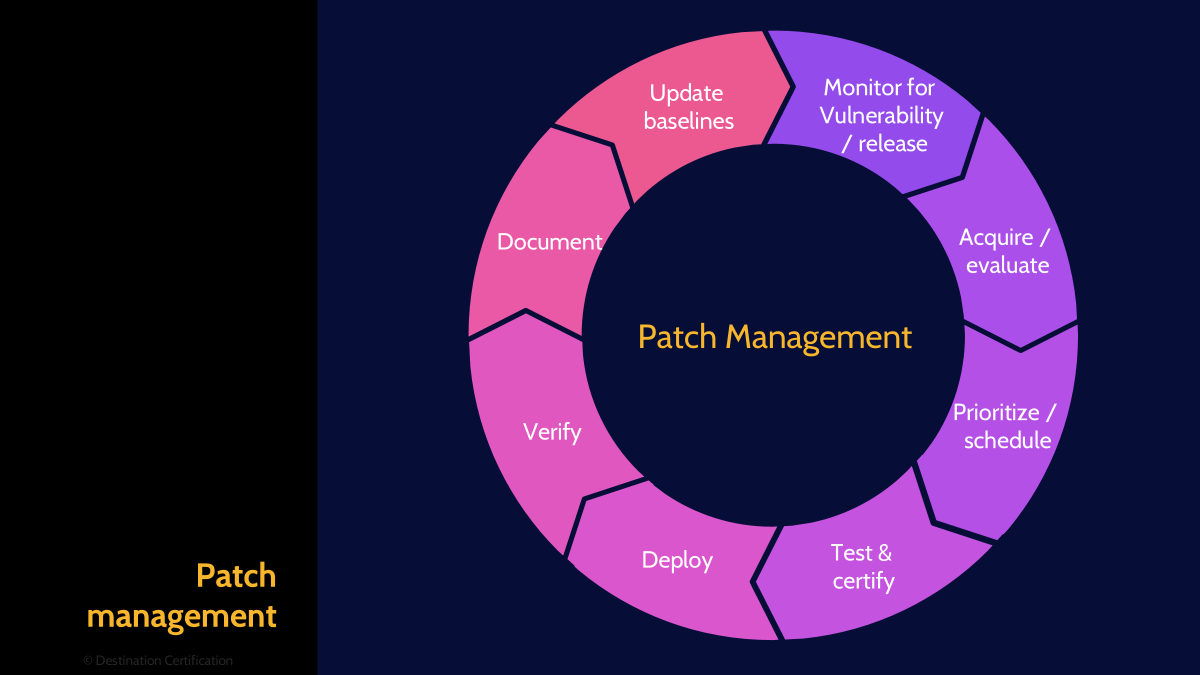
We can start from patch management. It serves as the cornerstone of operational security, representing the systematic approach to identifying, acquiring, testing, and deploying software updates across an organization's infrastructure. It’s more than slapping on vendor updates. Real patching is a team sport: security spots the risks, operations keeps systems running, and together they avoid a crash. Effective patch management balances the urgency of addressing security vulnerabilities with the operational reality of maintaining stable, functioning systems.
Change Management
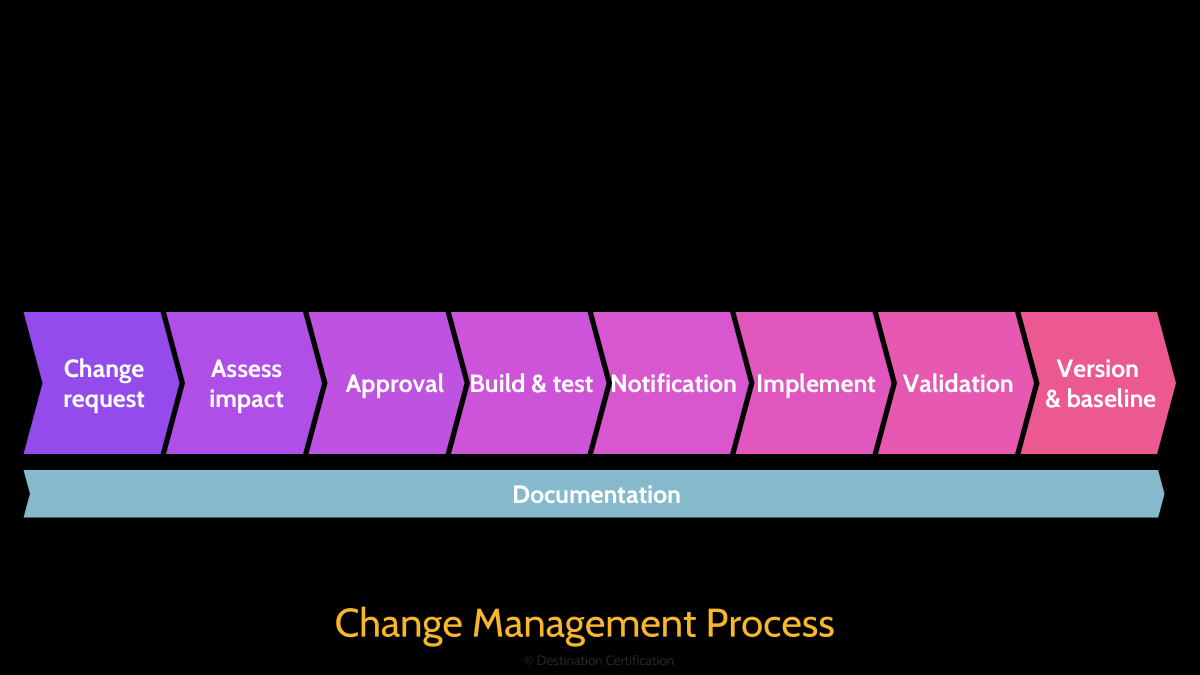
But patches are only part of the picture. Any change, big or small, needs structure — and that’s exactly what change management delivers.
Change management provides the structured framework through which all modifications to IT systems flow, ensuring that every alteration to the technology environment undergoes appropriate scrutiny and control. This discipline transforms what could be chaotic, ad-hoc modifications into a predictable, repeatable process that minimizes risk while enabling necessary evolution. Security considerations permeate every aspect of change management, from initial request through final implementation, as each change potentially introduces new vulnerabilities or affects existing security controls. The change management process creates accountability, traceability, and reversibility - three critical elements that allow organizations to maintain security posture even as their environments constantly evolve to meet business needs. To break this down, let’s discuss the main elements of change management, starting from change request.
Change request
A change request initiates the formal process of modifying any aspect of the IT environment, serving as the documented proposal that captures the what, why, and how of a proposed change. This documentation becomes the foundation for all subsequent decision-making, providing stakeholders with the information needed to evaluate risks and benefits.
Assess Impact
The next item on our agenda is Impact assessment. It transforms a change request from a simple proposal into a comprehensive understanding of consequences across the entire technology ecosystem. This analysis examines how the proposed change will affect system performance, user experience, security controls, and business processes. Security professionals particularly focus on identifying whether changes might create new attack vectors, weaken existing defenses, or affect compliance with regulatory requirements.
Approval
The approval phase represents the critical decision point where organizational leadership weighs the assessed impacts against business needs and risk tolerance. This isn't merely a rubber-stamp exercise but a deliberate evaluation involving multiple stakeholders who bring different perspectives to the decision. Security representatives ensure that risk considerations receive appropriate weight in the approval process, while operations teams confirm technical readiness and resource availability.
Build and test
Building and testing transforms approved changes from concept to reality within controlled environments that mirror production systems. This phase allows teams to verify that changes function as intended while identifying unexpected interactions or side effects before they can impact live systems.
Notification
Notification ensures that all affected parties know about upcoming changes, allowing them to prepare for potential impacts and adjust their activities accordingly. It’s less like a vague weather forecast and more like a detailed flight plan — when you take off, how long the turbulence might last, and what the emergency exits are if needed. Security teams use notifications to heighten monitoring during change windows, watching for anomalies that might indicate problems or attempted exploitation of temporary vulnerabilities.
Implement
Planning and testing are great — but at some point, you have to flip the switch. implementation executes the planned change in the production environment, following the tested procedures and timelines established during earlier phases. Teams work through predetermined steps while maintaining constant communication and monitoring for any signs of problems.
Validation
Next off, validation confirms that implemented changes achieved their intended objectives without creating unintended consequences or degrading system security. It’s like opening night for a play — you don’t just see if the curtain goes up, you check the timing, the critics’ reviews, and whether the audience clapped in the right places. So, to recap, security validation specifically verifies that access controls, encryption, logging, and other protective measures continue operating correctly in the modified environment.
Version and baseline
Finally, version control and baseline management create the historical record and reference points that enable organizations to understand their current state and track evolution over time. Each successful change establishes a new baseline configuration, documented and stored for future reference. This documentation becomes invaluable during security incidents, allowing teams to understand what changed and when, potentially identifying the source of vulnerabilities or the path attackers exploited.
Release Management
On the other hand, release management orchestrates the deployment of new or updated services into the production environment, coordinating multiple changes into cohesive releases that deliver business value while maintaining security and stability. Mature release management practices enable organizations to deliver innovation rapidly while maintaining the security controls that protect critical assets and data.

And that is an overview of Integration of the Security Program with IT Operations within Domain 3, covering the most critical concepts you need to know for the exam.
Something really cool we are providing with these MindMap videos is a completely FREE downloadable version of all the MindMaps in PDF format. We even include a blank version of each MindMap in case you want to print them out and take notes as you listen along. Link to download the MindMaps is in the description below.
If you found this video helpful you can hit the thumbs up button and if you want to be notified when we release additional videos in this MindMap series, then please subscribe and hit the bell icon to get notifications.
I will provide links to the other MindMap videos in the description below.
Thanks very much for watching! And all the best in your studies