

Practice on a CISSP exam that behaves like the real one
The CISSP exam adapts to you as you answer.
Almost no practice test does.
Our simulator is a real adaptive exam, so the first time you face an engine that adjusts to you is during practice, not on exam day.
Most "CAT-style" practice exams are not adaptive
Static question bank
Search for a CISSP practice exam and you will find dozens promising a realistic, exam-like, CAT-style experience. Open them and most hand you the same fixed list of questions every time, in the same order, at the same difficulty. That is a standard question bank with adaptive language bolted onto the marketing.
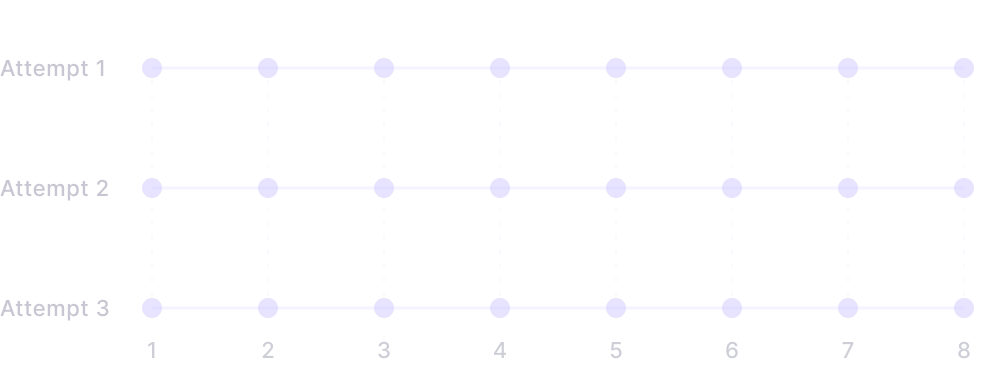
“the same fixed list of questions every time, in the same order, at the same difficulty”
Adaptive exam
You can score well on a static test like that and still be thrown by the real one. The live engine reads your performance and raises the difficulty when you get a run of answers right, so the questions push back in a way a fixed list never will. If your only preparation was a static bank, that pressure lands for the first time when it counts.
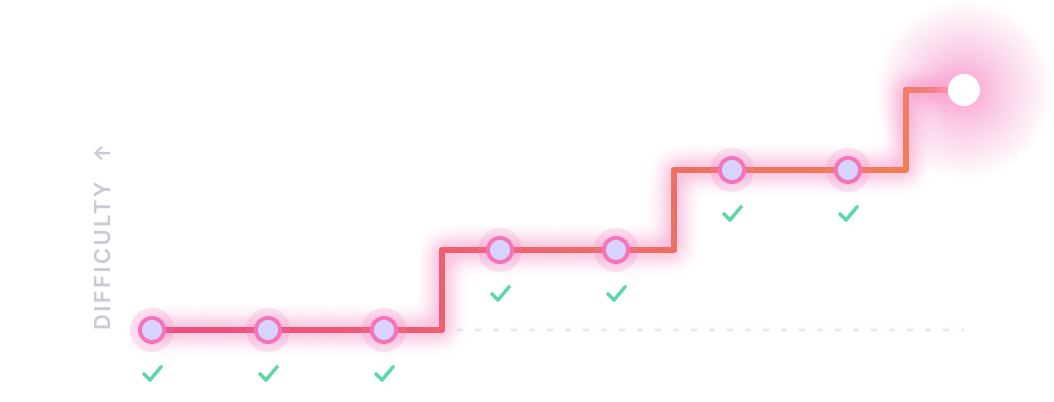
“raises the difficulty when you get a run of answers right”
What makes an exam actually adaptive
Computerized Adaptive Testing (CAT) is the format ISC2 uses for the English CISSP exam. Instead of giving every candidate the same set, the exam picks each question based on how you answered the ones before it. Answer well and the next question gets harder; miss a few and it eases off. The engine is narrowing in on your true ability with every response.
A few things follow from that, and you can check any of them against the official ISC2 exam outline:
- The English CISSP CAT exam runs from 100 to 150 questions, with a time limit of up to three hours.
- 100–150
- Twenty-five of those questions are unscored items ISC2 is trialing, and you cannot tell which.
- 25
- The pass standard is 700 out of 1000, though under CAT you never see a number. You get a pass or a fail.
- 700 / 1000
You cannot go back. Each answer is final once you confirm it.
The exam ends when the engine is confident you are clearly above or clearly below the standard, so two people can pass after very different numbers of questions.
The simple test for any practice product: if it serves everyone the same fixed list in the same order, it is not adaptive, whatever the label says.
However, some practice tests show a random selection of questions from a larger bank. That’s still not an adaptive test, unless they choose the next question to show based on all your previous answers. That’s the part many “adaptive” tests don’t actually do.
How our CISSP exam simulator works
Our simulator is a real adaptive exam. The engine adjusts difficulty as you answer, the way the ISC2 exam does, so your practice sessions feel like the test you are training for.
No going back.
DURING THE EXAM
You practice making a final call and moving on, which is the part candidates used to flagging and reviewing find hardest.
Feedback by domain.
WHEN YOU FINISH
When you finish, you see where you stand across all eight domains, not a single blended score, so you know which areas are carrying you and which are dragging.
It feeds your adaptive review guide (for both MasterClass and Bootcamp students).
AFTER THE SESSION
Your simulator results, along with your assessments and flashcards, shape what the review guide puts in front of you next, so you stop rereading material you have already locked in.
It comes with your CISSP training
INCLUDED WITH TRAINING
You do not buy the simulator on its own. It is included in both of our CISSP programs, the self-paced MasterClass and the live Bootcamp, so however you choose to train, the adaptive simulator is part of the package alongside the full course and the domain MindMaps.
CISSP MasterClass
self-paced
- The domain MindMaps
- The adaptive simulator
Simulator attempts: Essential 1 · Preferred 3 · Premier 15
CISSP Bootcamp
live
- The full course
- The domain MindMaps
- The adaptive simulator
Simulator attempts: 3
93.6% of our mentored CISSP students pass on their first attempt, and nearly all of those who need a second attempt pass it.
- That combination is why our numbers hold up.
- 93.6%

What this means on exam day
By the time you schedule your exam, none of it is new. You have already sat an exam that adapts to you, already practiced committing to an answer with no way back, and already seen your weakest domains named so you could close them before they cost you.
- Already sat an exam that adapts to you
- Already practiced committing to an answer with no way back
- Already seen your weakest domains named
You walk in ready for how the exam behaves, not just what it covers.
Frequently Asked Questions
Is the CISSP exam adaptive?
Yes. The English CISSP exam uses Computerized Adaptive Testing, so the difficulty of each question responds to how you have answered so far. The linear version used for other languages is not adaptive.
How many questions is the CISSP CAT exam, and how long is it?
Between 100 and 150 questions, with a time limit of up to three hours. The exam ends early once the engine is confident about your result, so your exact question count depends on your performance.
Is your simulator really adaptive, or is it a CAT-style question bank?
It is a real adaptive engine. Difficulty changes based on your answers during the session, and you cannot go back, the same way the live exam works. You can confirm the difference by comparing a session against any fixed-list practice test.
Can I buy the simulator separately?
No. The simulator is included in the CISSP MasterClass rather than sold on its own, so you get it alongside the full course, the MindMaps, and mentoring on our Preferred and Premier tiers.
Will it tell me whether I am ready to sit the exam?
It shows your performance by domain and feeds your adaptive review guide, so you can see which domains are solid and which need more work before you book your test.
Get the simulator with your CISSP training
Two ways to train with us, both including the exam simulator:
CISSP MasterClass
self-paced, with a structured path, weekly live calls, and personal mentoring on the Preferred and Premier tiers.
CISSP Bootcamp
a live, instructor-led intensive when you want to be certified against a deadline.